Geologic Time Scale:
This week I will be taking the time to re-look over the Geologic Time Scale and hope to remember it. I do not have the time scale fully memorized yet, but this week I plan to look over it and take time to memorize it. I plan to learn the song from the youtube videos and or attempt to create a mnemonic device to remember it.
Fossils:
Fossils are composed of animal remains. They allow us to find old creatures, plants, and tell us about time and what may have happened many years ago. There are also many different types of fossils like: amber, trace fossils, and petrified food. Fossils are incredible. Amber is tree sap that is fossilized that can contain particles of insects. Trace fossils are impressions or imprints from animals, or plants.
Here is what I learned from Google and in class:
We can tell the age of fossils through radiometric dating.
Another types of fossils are compressed leaf imprinting, trilobites, molds and casts, carbonization, petrified animals and wood, and whole animals caught in the action.
Fossil Lab 2-27-13
Earlier this week my class made fossils by using plaster and sand. The easiest fossil to get out was the 25 mL of plaster and 50 mL of sand mixture. The next one to be the easiest was made of 50 mL plaster and 50 mL of sand. The hardest fossil mixture to release contained 100 mL of plaster and 26 mL of sand. Over all the first and easiest fossil mixture left the best impression.
Monday, February 25, 2013

Friday, February 22, 2013
Time
Two years ago, I learned about geologic time at Finlandia University by professor Barb Mctaggart. She was a phenomenal teacher and gave us time to remember and learn the scale. Since then I have not had any opportunities, time, or classes that needed me to use the information I once learned. Because of that I no longer remember as well how the time periods go for geologic time, but from the music videos about geologic time I find it will not be hard to remember them again. If there is one thing I did learn and remember is that the Precambrian period was the first block of the scale. Also I recall the words, "Paleozoic, Mesozoic, and Cenozoic". I am excited to relearn about the time scale and what happened in those periods.

Wednesday, February 20, 2013
Geologic Time
Over the snow day I was given some videos to watch for my blog. At first I was disappointed thinking, "Oh man! Homework." Then I clicked on the videos and I was blown away by what I was told to watch. How could I be disappointed about learning about the Earth? I am highly upset by myself.
I am torn between to music videos about Geologic time. One video was to the tune, "We Didn't Start The Fire" by Billy Joel, a classic! I was nerding out once I started to watch each video because I knew what they were referencing to, and because it was about geologic time. The second video was called "Ages of Rock". I think both videos are a great way to learn the time periods and neat facts about what happened during those times. I will be listening to these over again to help me memorize these. Until then, I will be jamming to "We Didn't Start The Fire" while studying for my lab quiz tomorrow.
I am torn between to music videos about Geologic time. One video was to the tune, "We Didn't Start The Fire" by Billy Joel, a classic! I was nerding out once I started to watch each video because I knew what they were referencing to, and because it was about geologic time. The second video was called "Ages of Rock". I think both videos are a great way to learn the time periods and neat facts about what happened during those times. I will be listening to these over again to help me memorize these. Until then, I will be jamming to "We Didn't Start The Fire" while studying for my lab quiz tomorrow.
Monday, February 4, 2013
If I Had A Hundred Dollars
If our solar system was divided up into one hundred dollars between the:
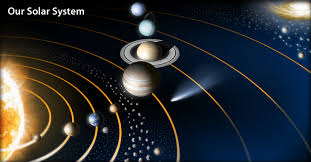
- Sun-10 dollars Correct Answer: $99.85
- Earth-10 dollars Correct Answer: .0003 cents
- Mercury-10 dollars Correct Answer: .00002 cents
- Venus-10 dollars Correct Answer: .0003 cents (Spins opposite of the Earth)
- Mars-10 dollars Correct Answer: .00004 cents (Half the size of Earth)
- Jupiter-10 dollars Correct Answer: 10.6 cents (Biggest planet)
- Saturn-10 dollars Correct Answer: 3.2 cents (Second biggest planet)
- Uranus-10 dollars Correct Answer: .005 cents (Tilted at 90 degrees, causing bizarre weather)
- Neptune-10 dollars Correct Answer: .006 cents
- Satellites- 5 dollars Correct Answer: Depends (Almost nothing)
- Minor Elements (Comets, asteroids, Trans Neptunium Object's, Meteoroid Belts, Orc Cloud...etc)-5 dollars Correct Answer: (Almost nothing)
Wednesday, January 30, 2013
Lunar Video: A Private Universe
Today in class I watched a video called "A Private Universe" produced by the Harvard-Simithsonian Center for Astrophysics made in 1987. It was about students, alumni, and faculty beliefs about science. I thought it was amazing and true how students, like myself, had trouble answering the questions or did not know the full reason to the questions being asked.
First question: The reasons for the seasons are for the earth's different rotations and far away we are from the Sun. The answer I have written is not right.
Another question asked was: What is the reason for the phases of the moon?
The reason for the phases of the moon is for the gravitational tilt of Earth's axis and how the Sun is lined up to the Earth and moon. The Sun will illuminate the moon.My answer is incorrect, and I am drawing a blank. Under Pressure~.

Here is a fun song to teach about the moon's phases to elementary students!This song is educational, fun, and very catchy!
First question: The reasons for the seasons are for the earth's different rotations and far away we are from the Sun. The answer I have written is not right.
- The correct answer for the reason seasons occur is when the Earth spins on its axis it spins in a elliptical manner. Summer occurs when the Earth's axis is tilted towards the Sun. Winter occurs when the Earth's axis is titlted away from the sun. And for the other seasons like Spring and Fall the Earth's axis will be pointed 90 degrees from the Sun, according to the National Weather Service in Louisville KY.

Another question asked was: What is the reason for the phases of the moon?
The reason for the phases of the moon is for the gravitational tilt of Earth's axis and how the Sun is lined up to the Earth and moon. The Sun will illuminate the moon.My answer is incorrect, and I am drawing a blank. Under Pressure~.
- The real reason for the moon's different phases is from Earth's moon orbiting the earth and reflects sunlight from the Sun.
Here is a fun song to teach about the moon's phases to elementary students!This song is educational, fun, and very catchy!
Monday, January 14, 2013
M&M Learning Model
Today in Earth Science I learned a wonderful method on how to describe to children the layers of the Earth. The Lithosphere of the Earth has two main cores, an inner (plastic) core and an outer (liquid) core, a solid mantle, a plastic upper mantle, and a solid crust. Below I have provided an image I have found on Google to describe the layers of the Earth.

To help students understand the Earth's layers, my teacher shared with us the M&M method. What one does is bite half of a chocolate peanut M&M. A student can then observe the layers of the M&M and will be able to label the treat to understand the concept of Earth's layers and how M&M's and the Earth are similar.
A peanut M&M and the Earth's layers are similar because they each contain a crust; in this case an M&M has a chocolate casing, an inner and outer core, and a mantle. Even though the peanut M&M does not have a liquid or plastic core, a student will be able to understand that this delicious treat contains many layers. This will help students visualize and remember the Earth's layers. Below I have provided an image I found on Google of a half eaten M&M that I have labeled.

This was a fantastic experiment and if I have the chance to teach my future students Earth's layers I will use the M&M method if I have an old enough group. I would have never have thought of using an M&M to design a way for students to visualize and remember the layers. I know because of this project, I will never forget the layers. This was a fun representation and afterwords a nice treat to enjoy!
Below are the websites I used for the pictures:
1st picture: http://www.sms-tsunami-warning.com/theme/tsunami/img/structure-of-the-earth.jpg
2nd picture: http://www.google.com/imgres?um=1&hl=en&sa=N&tbo=d&biw=1440&bih=730&tbm=isch&tbnid=CcUhMQZ9i4GkCM:&imgrefurl=http://www.obsessivesweets.com/2010/05/strawberried-peanut-butter-m.html&docid=JQKKETMhNCipGM&imgurl=https://blogger.googleusercontent.com/img/b/R29vZ2xl/AVvXsEj83LcI_SSIe6Bw4pOKtoiXBIDcT3THCK2Bh5r1MOWuiCLNGAFTlGFDO0WoCVSwj536ropKvpAcNz1g4HF8viQz10GcyiXx5tWJoTLApldFzVaWMlbxJhbURz6UNsp5vdeJck8ESB_cGG6u/s1600/100_3126.JPG&w=1600&h=1068&ei=xnL0UIiqGoHF2QWhi4HoAg&zoom=1&iact=hc&vpx=470&vpy=172&dur=548&hovh=137&hovw=203&tx=141&ty=69&sig=107868146762121972164&page=3&tbnh=137&tbnw=203&start=68&ndsp=39&ved=1t:429,r:87,s:0,i:353
To help students understand the Earth's layers, my teacher shared with us the M&M method. What one does is bite half of a chocolate peanut M&M. A student can then observe the layers of the M&M and will be able to label the treat to understand the concept of Earth's layers and how M&M's and the Earth are similar.
A peanut M&M and the Earth's layers are similar because they each contain a crust; in this case an M&M has a chocolate casing, an inner and outer core, and a mantle. Even though the peanut M&M does not have a liquid or plastic core, a student will be able to understand that this delicious treat contains many layers. This will help students visualize and remember the Earth's layers. Below I have provided an image I found on Google of a half eaten M&M that I have labeled.

This was a fantastic experiment and if I have the chance to teach my future students Earth's layers I will use the M&M method if I have an old enough group. I would have never have thought of using an M&M to design a way for students to visualize and remember the layers. I know because of this project, I will never forget the layers. This was a fun representation and afterwords a nice treat to enjoy!
Below are the websites I used for the pictures:
1st picture: http://www.sms-tsunami-warning.com/theme/tsunami/img/structure-of-the-earth.jpg
2nd picture: http://www.google.com/imgres?um=1&hl=en&sa=N&tbo=d&biw=1440&bih=730&tbm=isch&tbnid=CcUhMQZ9i4GkCM:&imgrefurl=http://www.obsessivesweets.com/2010/05/strawberried-peanut-butter-m.html&docid=JQKKETMhNCipGM&imgurl=https://blogger.googleusercontent.com/img/b/R29vZ2xl/AVvXsEj83LcI_SSIe6Bw4pOKtoiXBIDcT3THCK2Bh5r1MOWuiCLNGAFTlGFDO0WoCVSwj536ropKvpAcNz1g4HF8viQz10GcyiXx5tWJoTLApldFzVaWMlbxJhbURz6UNsp5vdeJck8ESB_cGG6u/s1600/100_3126.JPG&w=1600&h=1068&ei=xnL0UIiqGoHF2QWhi4HoAg&zoom=1&iact=hc&vpx=470&vpy=172&dur=548&hovh=137&hovw=203&tx=141&ty=69&sig=107868146762121972164&page=3&tbnh=137&tbnw=203&start=68&ndsp=39&ved=1t:429,r:87,s:0,i:353
Subscribe to:
Comments (Atom)